Google Chrome is a browser that combines a minimal design with sophisticated technology to make the web faster, safer, and easier.
Tuesday, September 2, 2008


Seven of the World's Most Expensive Cell Phones
 Can you imagine that the cost of cell phone is more than that of a flat? Who dares to buy such phones? Only rich people can afford them. Here is a list of such cell phones.
Cobra - Vertu
The cost of Cobra - Vertu is $310,000. It was designed with jeweled snakes by the French jeweler Frederic Boucheron. Only 8 such phones exist in the world. Another version Vertu-Python is availbale for $115,000 and only 26 such phones exist.
Why this phone is expensive: This phone is made out of gold and decorated with one pear-cut diamond, one round white diamond, two emerald eyes and 439 rubies.
Sony Ericsson Black Diamond
The cost of Sony Ericsson Black Diamond is $300,000. Only 5 such phones have ever been made.
Why this phone is expensive: This phone is very useful gadget that is featured with a Intel Xscale de 400 Mhz processor, a 4MP digital camera, touch screen and can be connected to the internet thorugh WiFi. This phone has excellent body with mirror-finish cladding and diamonds.
Diamond Crypto Smartphone
The cost of Diamond Crypto Smartphone is $130,000. This phone was desinged by Austalian designer Peter Aloisson.
Why this phone is expensive: This phone is made out of platinum and covered with 50 diamonds, 10 of which are rare blue diamonds. The phone is featured with powerful encryption technology to provide social security.
GoldVish Le Million
The cost of this phone is $1.3 million. This is officially recognized as the most expensive phone in the world by the Guinness World Records. The company manufactured only 100 pieces.
Why this phone is expensive: It is made out of 18 carat white gold and coated with 120 carat diamond. The features include MP3, camera and 2GB memory.
Nokia 8800 Arte with pink diamonds
The cost of Nokia 8800 Arte is $134,000. It was designed by Australian designer Peter Aloisson.
Why this is most expensive: The cell phone is decorated with 21 carats of pink and white diamonds. The features include 3.15 MP camera with autofocus and video, Music plyer, Bluetooth, voice memo etc.
Vertu Diamond
The cost of Vertu Diamond is $88,000. The company plans to make only 200 cell phones, so only 200 people can get this.
Why this is expensive: The body of this phone is designed with platinum and encrusted with diamonds.
Motorola V220 with Diamonds
The cost of Motorolla V220 is $51,800. This phone is designed by Australian designer Peter Aloisson and suitable for football players and film stars.
Why this phone is expensive: This phone is studded with 1200 diamonds. It has 18 carat gold keyboard. The features include VGA camera, USB, WAP Browser etc.
Source: Quazen.com
Third generation Zune pictures leak: 120GB and 16GB flavors
The third generation of Microsoft's Zune portable media player product line has been talked about and speculated for quite a while now, but very little has managed to leak out of Redmond, until now. A Canadian has supposedly somehow gotten his hands on both 16GB and 120GB flavors of the Zune, both of which are expected to be released under Zune 3.0 (recall that the original Zune 30GB is considered first generation and that the Zune 4, Zune 8, and Zune 80 are considered second generation). Zunited has four pictures the lucky Canadian supposedly took with a 2.0MP camera:


If you doubt the authenticity of these pictures because the 16GB box is in English as well as French, recall that this is likely because the Zune came to Canada back in June. There really isn't much else to glean from these images, other than the fact that the third generation Zune really doesn't seem to have anything new going for it on the outside, except for maybe a little gloss on the front.
Microsoft probably isn't trying to stray away too much from what it currently has hardware-wise, because it is likely hoping to again roll out the new firmware version to previous generations (like it did when it released the second generation Zunes). The first generation Zune was really a modified Toshiba 1089, and only in the second generation did Microsoft truly take over the hardware, and give the firmware and software a serious revamp. The third generation will likely only have minor hardware tweaks, and of course a new firmware version. Zunited claims that it has "undeniable proof from an exclusive and disclosed source that the 120gb model is running 2.5 firmware."
Source: ArsTechnica.com
Mozilla Not Worried About Google Browser
 In response to today’s news that Google is releasing its own browser, code-named Chrome, I decide to call John Lilly, CEO of Mozilla Corp., the folks behind the fast-growing Firefox browser. My intention was to find out what Lilly thought about this development, especially since Mozilla has been viewed as close personal partner of Google’s.
The open-source browser maker depends heavily on a lucrative financial deal it has signed with the search company. The pair recently renewed the deal to last through 2011. Was Lilly worried about yet another browser in the market?
After all, the emergence of Linux has had an equally deflationary impact on the UNIX market. Can a Google browser, promoted on Google homepage and pushed through Google’s mobile OS, become a sticky wicket for Mozilla Firefox?
“We collaborate with them on a bunch of things and we have a financial relationship,” Lilly says. “So there is another browser and that makes for a more competitive world. Of course we would have to compete.”
Given that Microsoft still controls about 72 percent of the browser market, Google can’t afford to leave that business to chance. Web is its business, and the browser is a necessary weapon for the company. “It is not surprising that they are doing a browser. Google does many things (servers, energy) that touch their business,” he said. “They feel that they can make a better browser by starting from scratch…advances in browsers are good.”
Lilly pointed out that most of the other browser vendors — Microsoft, Apple and now Google — have other businesses and thus another agenda. For Mozilla, Firefox was the only agenda. “Our only agenda is to make web better — it is our single mission,” Lilly says. With over 200 million users worldwide and a development team made up mostly of volunteers, Lilly says he isn’t worried about Chrome just yet. “I really don’t know how it will impact us,” he says.
He is right to take a wait-and-see attitude. For one, browser market share doesn’t change overnight. Google, despite its awesome reach, has a history of launching products that tend to lose steam. It has yet to hit home runs that rival its search and contextual advertising businesses.
Not having seen Chrome, I will withhold any final judgement myself, but I would look at the privacy implications of Chrome very, very carefully. I have long since stopped buying into the “do no evil” drivel the company keeps espousing.
This tussle between Mozilla and Google is going to get more gripping in coming years. Mozilla has a services strategy — Project Weave – that could eventually compete with Google’s suite of services. Whatever it is, it seems like Mozilla is ready for the challenge. And just when we thought the world of browsers was getting boring.
Source: GigaOM.com
Monday, September 1, 2008
Large Hadron Collider Goes Live On September 10
 The only data the Large Hadron Collider (LHC) has produced thus far is a powerful (but debunked) urban myth—that the particle accelerator buried under the Swiss-French border will generate apocalyptic black holes.
But today, the European Organization for Nuclear Research (CERN) has announced that the LHC will go online on September 10. On that day, researchers will activate particle beams within the 17-mile-long ring, and the world’s most powerful—and most talked about—particle accelerator will begin collecting experimental data.
The LHC’s research potential is staggering, with physicists hoping to use the accelerator’s extremely high-energy proton collisions to generate a range of theoretical particles. Some of those particles could help us to understand the nature of mass, including the as-yet-undetectable dark matter that accounts for so much of the universe’s mass. Other particles might prove the existence of extra dimensions, or lead to entirely new theories or physical laws (this musical explanation gives a good introduction to the LHC).
Until its debut in September, and possibly for the entire lifespan of the LHC, rumors of its doomsday potential are likely to persist, fueled by reports of its unprecedented power and potential. Physicists have pointed out that the microscopic black holes the collider could generate would disappear almost instantly, without wreaking any havoc on the accelerator or the rest of world.
But for anyone convinced that the LHC’s impending activation is a countdown to doomsday, the hand-wringing should commence this weekend, when the accelerator will host its first actual particle beam. As part of a scheduled injection test, the LHC will be closed off this Friday, and researchers at CERN will fire protons through one of the eight sectors that make up the sprawling concrete-lined collider tunnel.
The purpose of this test? “It’s, ‘Let’s see what happens,’ ” says Judy Jackson, head of the Office of Communications at Fermilab. “It’s a very complex machine. This is a step towards getting ready.”
As the LHC quietly marks a milestone this weekend, its inaugural run on September 10th will arrive with considerably more fanfare. The Bataiva, Illinois-based Fermilab, a Department of Energy-funded physics lab, will host what Jackson calls “a pajama party” for researchers and members of the media.
So when the accelerator goes online at 9 am in Europe., it will be 2 am in Illinois, and data will begin simultaneously streaming into Fermilab’s remote operations center, an exact replica of the LHC control room. Champagne will no doubt be raised—on more than one continent—and new scientific frontiers might be reached. And the world, we are assured, will not end.
Source: PopularMechanics.com
MP3 Players: The World's First (1998)


Today we all take MP3 players for granted. iPods are ubiquitous, mobile phones can play the format, even most new car stereos support MP3 right off the showroom floor. But it wasn’t always like this - Back in 1998, highly illegal sites like Audiofind were giving away artist’s songs quite openly and completely for free in pretty poor-sounding 112 and 128KBps MP3 format, and we were downloading them with our 56K modems - often taking up to half an hour a time.
You could play the files on your computer or you could even transfer them to CD - provided you didn’t mind paying out £10 for a blank disc in the first place, and waiting 30 minutes for it to write while saying a little prayer to the CD-R gods, due to the media’s high failure rate at the time.

Shortly after the MPMan’s launch, Napster came along and helped us to share and organise our music files. Transferring those files to the device was a painfully slow process over a serial connection, but it didn’t matter - music was taking its very first steps towards escaping the physical formats that it had forever been associated with. Little did we know that 10 years later, even granny and grampa would be downloading their music from the internet, and the man in the street could carry hundreds of gigabytes of high-quality music in his pocket.

It’s all thanks to the MPMan F10.
Source: TeamTeabag.com
Google Chrome: Google’s Browser Project
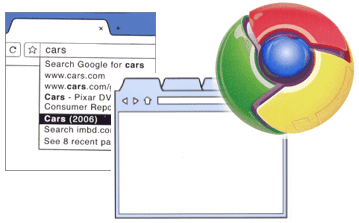
At Google, we have a saying: “launch early and iterate.” While this approach is usually limited to our engineers, it apparently applies to our mailroom as well! As you may have read in the blogosphere, we hit "send" a bit early on a comic book introducing our new open source browser, Google Chrome. As we believe in access to information for everyone, we've now made the comic publicly available -- you can find it here. We will be launching the beta version of Google Chrome tomorrow in more than 100 countries.
So why are we launching Google Chrome? Because we believe we can add value for users and, at the same time, help drive innovation on the web.
All of us at Google spend much of our time working inside a browser. We search, chat, email and collaborate in a browser. And in our spare time, we shop, bank, read news and keep in touch with friends -- all using a browser. Because we spend so much time online, we began seriously thinking about what kind of browser could exist if we started from scratch and built on the best elements out there. We realized that the web had evolved from mainly simple text pages to rich, interactive applications and that we needed to completely rethink the browser. What we really needed was not just a browser, but also a modern platform for web pages and applications, and that's what we set out to build.
On the surface, we designed a browser window that is streamlined and simple. To most people, it isn't the browser that matters. It's only a tool to run the important stuff -- the pages, sites and applications that make up the web. Like the classic Google homepage, Google Chrome is clean and fast. It gets out of your way and gets you where you want to go.
Under the hood, we were able to build the foundation of a browser that runs today's complex web applications much better. By keeping each tab in an isolated "sandbox", we were able to prevent one tab from crashing another and provide improved protection from rogue sites. We improved speed and responsiveness across the board. We also built a more powerful JavaScript engine, V8, to power the next generation of web applications that aren't even possible in today's browsers.
This is just the beginning -- Google Chrome is far from done. We're releasing this beta for Windows to start the broader discussion and hear from you as quickly as possible. We're hard at work building versions for Mac and Linux too, and will continue to make it even faster and more robust.
We owe a great debt to many open source projects, and we're committed to continuing on their path. We've used components from Apple's WebKit and Mozilla's Firefox, among others -- and in that spirit, we are making all of our code open source as well. We hope to collaborate with the entire community to help drive the web forward.
The web gets better with more options and innovation. Google Chrome is another option, and we hope it contributes to making the web even better.
So check in again tomorrow to try Google Chrome for yourself. We'll post an update here as soon as it's ready.
*Update 3:30 PM: We've added a link to our comic book explaining Chrome.
Source: Google Blog
Subscribe to:
Posts (Atom)

